Anker Høyer
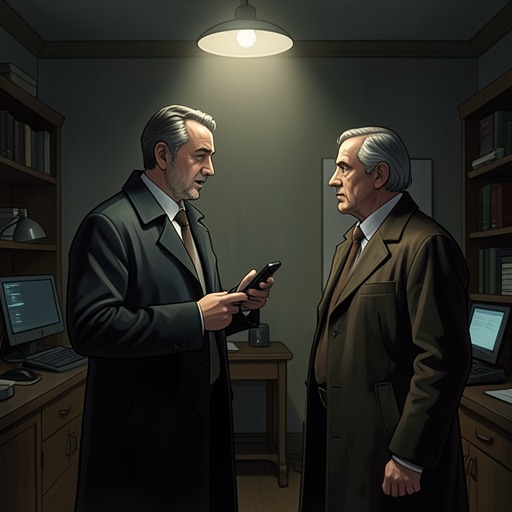
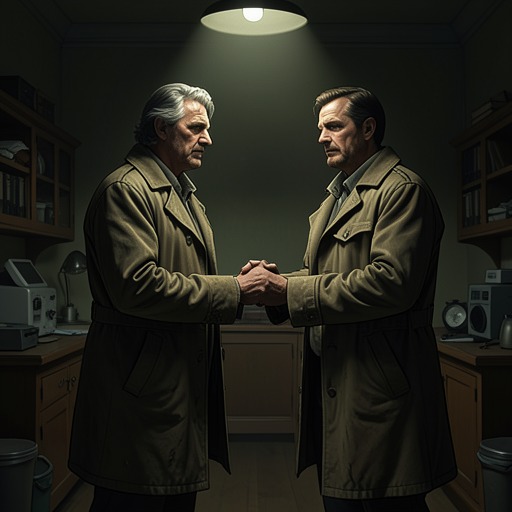
The Hanging GirlAnker Høyer is a police officer and colleague of Carl Mørck and Hardy Henningsen, killed on Amager in the same attack in which Hardy was permanently physically damaged and Carl was shot. The novel presents him through two sharply different kinds of recollection: an intimate memory of a birthday meal with Carl and Hardy, and the later police account of a case whose weapon is recovered years after the violence. Hardy’s recollection also preserves a troubling uncertainty about Anker’s possible part in the shooting, without resolving it.
Identity and Place in the Investigation
Anker Høyer belongs to the group of officers whose shared history is marked by the events of January 26, 2007. At a later press conference, Terje Ploug identifies the murder of Anker Høyer, the permanent physical damage suffered by Hardy Henningsen, and the shooting of Carl Mørck as crimes committed with the same weapon. The account establishes Anker’s death as part of a single attack with lasting consequences for the other two men, rather than an isolated case.
The weapon’s recovery gives the old events a new, material point of connection. Carl Mørck says that investigators may have found the firearm that killed Anker Høyer and nearly killed Carl and Hardy Henningsen. The discovery follows a raid, and Lars Bjørn has called a press conference because a Danish policeman was killed with the weapon. The scene frames the recovered firearm as evidence that can reunite crimes separated from the present by more than seven years; it does not, in itself, settle every question about the people involved.
Friendship with Carl and Hardy
A memory of Carl Mørck’s birthday in 2005 offers a more personal view of Anker Høyer. Carl, Hardy Henningsen, and Anker Høyer were eating roast pork at Montparnasse. Vigga had just moved out, and Carl was pouring out his feelings when a drunken man sat down at their table and began tugging at Anker’s sleeve. The recollection places Anker within a familiar, shared social world: the meal is meant to celebrate Carl, while the strain in Carl’s private life is present at the table too.
The stranger’s interruption is a small but concrete detail in a memory otherwise defined by companionship. He approaches the group through Anker, pulling at his sleeve, while Carl is absorbed in speaking about his circumstances. The scene does not explain the man’s identity or establish what followed, so its importance rests in the contrast it creates with the later account of the attack: Anker is first recalled as a companion at an ordinary gathering, and then named among the victims of a violent episode that binds the three colleagues’ lives together.
The 2007 Attack and Its Aftermath
At the press conference, Terje Ploug dates the three crimes to January 26, 2007, more than seven years earlier. Anker Høyer was murdered; Hardy Henningsen was left with permanent physical damage and remained so marked by the episode that he could not attend the conference; Carl Mørck was shot. The statement emphasizes both the shared cause—the same weapon—and the different, continuing consequences for the men. Anker cannot return to the inquiry, while Hardy’s absence is itself evidence of the attack’s enduring effects.
The investigation also connects Anker Høyer to a separate nail-gun murder case on Amager. A younger man murdered with a nail gun in a local car-repair shop is identified as the nephew of the man Carl Mørck, Anker Høyer, and Hardy Henningsen had found murdered with a Paslode nail in his temple. This detail locates Anker among the officers who encountered that earlier victim and supplies a family link between the two murdered men. It does not establish that the nail-gun killings were committed with the firearm later associated with Anker’s death; the press-conference account concerns the weapon used against Anker, Hardy, and Carl.
Suspicion and Unresolved Meaning
The friendship scenes do not make Anker Høyer’s history uncomplicated. When Carl Mørck tries to concentrate, he remembers that Hardy Henningsen had said long before that he suspected Anker had some part in the shooting on Amager. The evidence presents this as Hardy’s suspicion, not as a proven role or a confession. Its placement beside the account of Anker’s murder gives the recollection a destabilizing effect: the dead colleague is not only remembered as someone sharing a meal and a history with Carl and Hardy, but also associated with a question Hardy had raised and Carl had not forgotten.
That uncertainty remains important because the later recovery of the weapon clarifies the connection among the attacks without, in the supplied account, answering Hardy’s suspicion. Anker Høyer’s narrative presence is therefore defined by both loss and incomplete knowledge. The birthday meal recalls the closeness of the surviving colleagues to him; the press conference records the common weapon and the damage it caused; Hardy’s old remark leaves open a question about Anker’s relationship to the shooting. Together, these fragments make his absence central to the investigation while preserving the limits of what the evidence establishes.